
High Quality Electronics
Reliable electronics are not created by accident.
Long product lifetime starts with engineering decisions made long before a single unit reaches the field: which components to specify, what temperature range to design for, and which industry requirements to comply with - not just on paper, but in practice.
High-Quality Components, Chosen Deliberately
Every component on an Elveta board is selected to survive the environment it will actually operate in, not just a lab bench. That means components rated for the full Nordic temperature range, from -40°C to +70°C, so a dongle mounted in an unheated meter cabinet performs the same during a July heatwave as it does in a January cold snap.
It also means designing in margin. A wide-input voltage regulator, current limiters, and ESD and EMC protection are not features that show up in a spec sheet comparison - they are what keeps a device running reliably for years instead of months.
The Details That Matter on P1 and HAN
For a device connected directly to an electricity meter's customer port, the interface itself imposes strict limits. Both P1 and HAN ports can only supply a small, tightly bounded amount of power, and exceeding those limits - even briefly - can cause a meter to reject the connection or shut the port down.
This is where details that are easy to overlook become critical: in-rush current at power-on, maximum current consumption during normal operation, and the capacitance the device presents to the port. Get any of these wrong and a dongle that works perfectly on one electricity meter model can fail to connect on another, even though both meters nominally support the same interface.
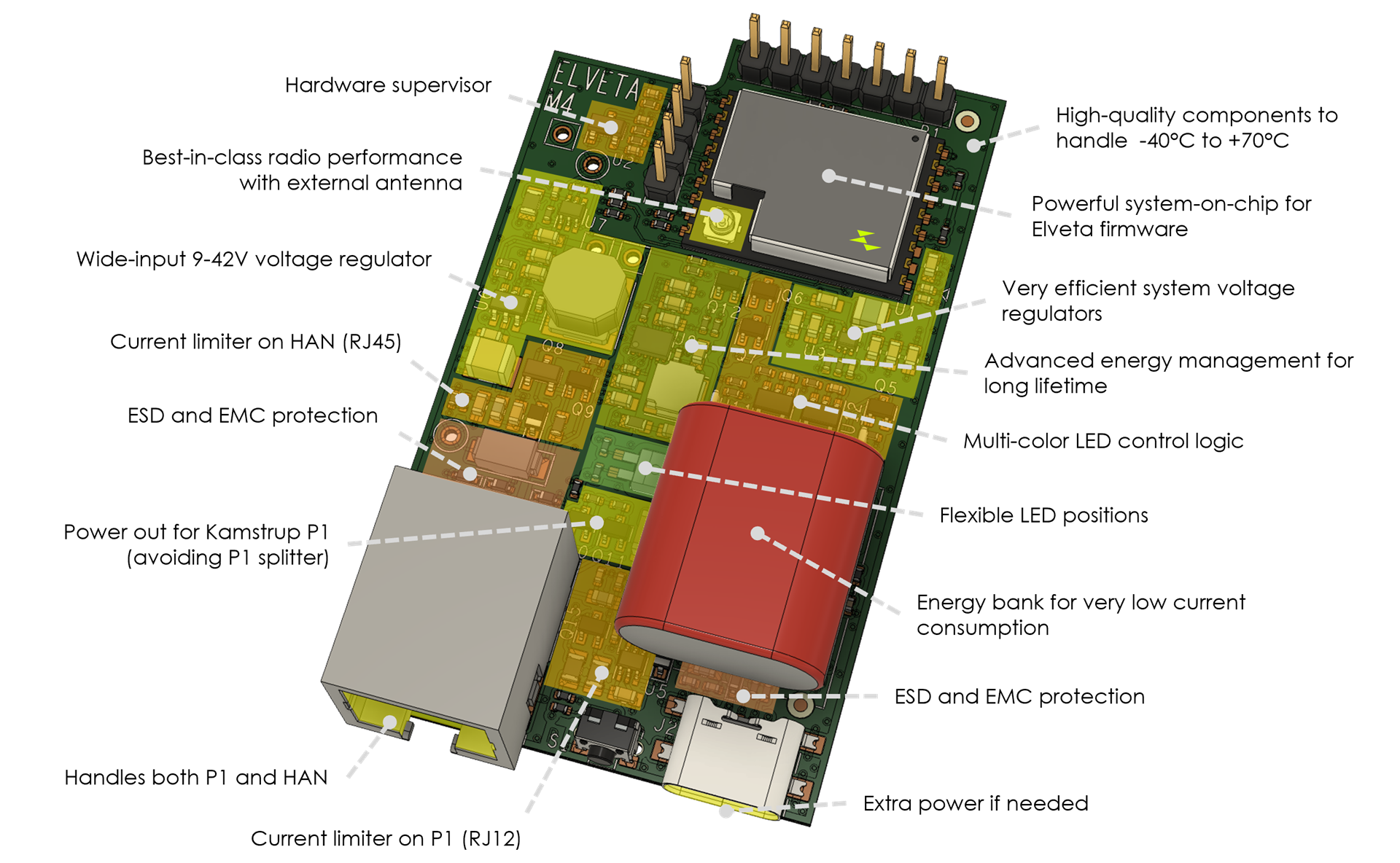
Elveta's hardware is built around exactly these constraints: current limiters on both the P1 (RJ12) and HAN (RJ45) sides, an energy bank that keeps current draw low and stable, and a hardware supervisor that manages power sequencing so the device never asks more of the meter than the interface allows.
Built for Real-World Conditions, Not Just the Datasheet
Complying with a standard is not the same as being compatible with real hardware in the field. It is common for products to work only because the electricity meter happens to overimplement the standard it claims to follow. Elveta is designed to comply with the standards themselves, so it works reliably even against meters that implement the specification exactly as written - no more, no less. For example, Elveta complies with the maximum current consumption limits of:
- Maximum 30 mA on HAN meters (RJ45)
- Maximum 75 mA on Kamstrup OMNIPOWER® meters
- Maximum 250 mA on P1 meters (RJ12)
That same philosophy extends to environmental durability: current limiters for in-rush and maximum current, ESD protection, and components rated for the Nordic climate all work together so the device keeps performing after years mounted in a metal cabinet, exposed to temperature swings, humidity, and electrical noise.
Reliability Is Engineered, Not Assumed
At Picofrost, we design Elveta for long-term operation in real-world conditions. Every choice - from the components on the board to the current limits enforced in hardware - is made to work day after day on every electricity meter it needs to support.
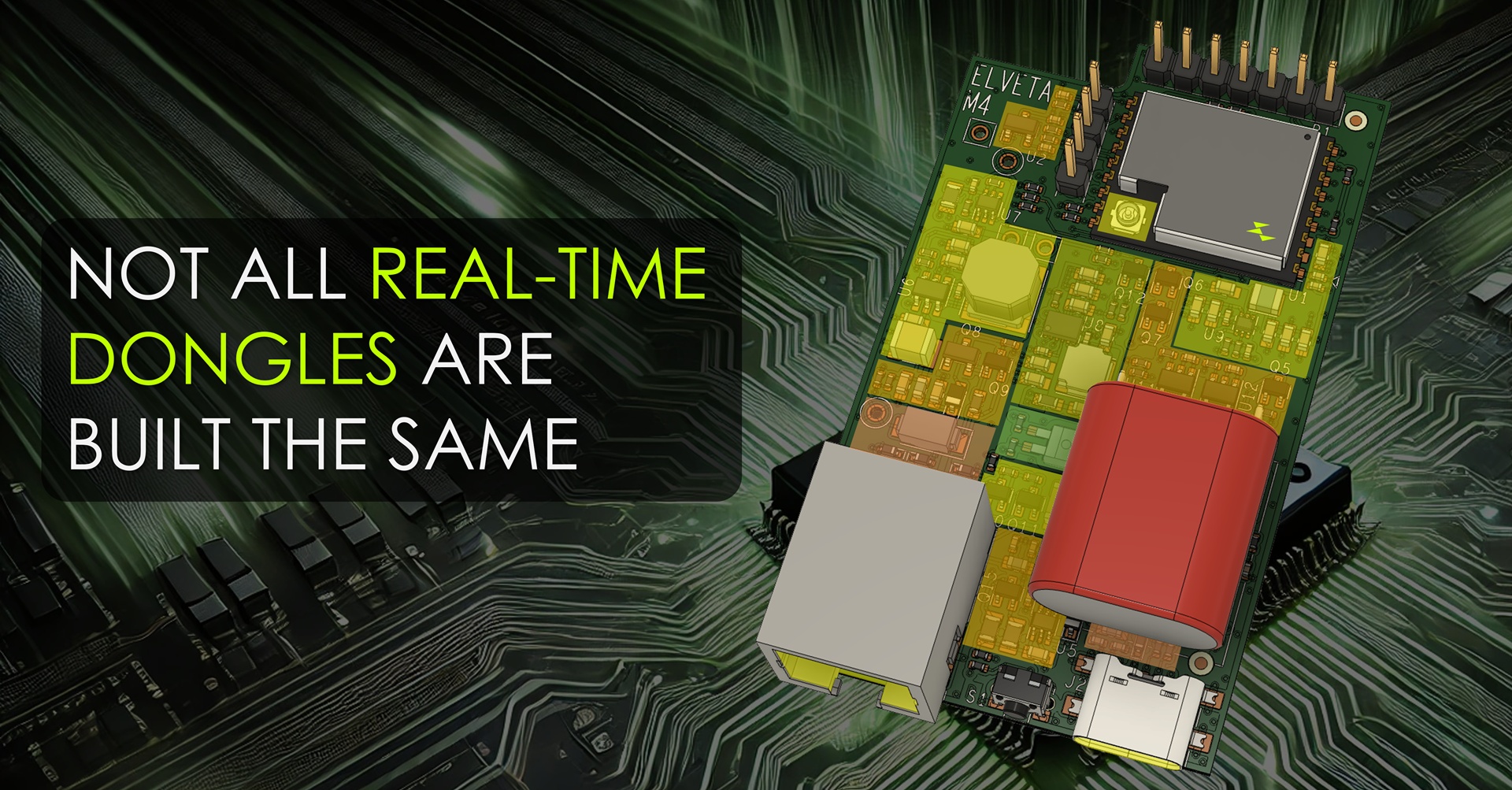
Not all real-time dongles are built the same. The difference does not show up on the first day - it shows up every day after.
Interested in discussing electronics design, IoT reliability, or real-time energy data? Contact us at info@picofrost.com.
#EnergyTech #IoT #ElectronicsDesign #SmartMetering #Engineering